Sfakia Sky Marathon
A competition in the heart of Madara
MARCH 23, 2025 | CHANIA | 24 MIN
MARCH 23, 2025 | CHANIA | 24 MIN
Sfakia Sky Marathon
A competition in the heart of Madara

The Sfakia Sky Marathon is a competition held on the last weekend of October in Crete. An extraordinary competition in every respect, but most probably due to the location and route. So let’s try to bring both of these aspects closer.
Crete is the largest of the Greek islands. It has an unusual, elongated shape, almost 300 km long from east to west and a width ranging from 20 to 70 km. It is located at the very southern end of Europe, almost the same distance from Athens and from the coast of Africa (about 300 km in each direction). However, it is only 100 km from the coast of the Peloponnese.


The Sfakia Sky Marathon is a competition held on the last weekend of October in Crete. An extraordinary event in every aspect, but most probably due to the location and route. So let’s try to bring both of these aspects closer.
Crete is the largest of the Greek islands. It has an unusual, elongated shape, almost 300 km long from east to west and a width ranging from 20 to 70 km. It is located at the very southern end of Europe, almost the same distance from Athens and from the coast of Africa (about 300 km in each direction). However, it is only 100 km from the coast of the Peloponnese.
Crete is very touristy and… very mountainous. At the same time, the distribution of both of these elements is uneven. The vast majority of tourists occupy the northern coast, with a huge number of hotels, guesthouses, beaches of various kinds and a “highway” connecting all the northern resorts.
In 2024, Crete was visited by about 6.5 million tourists, which is over 10% more than in the previous year. A similar increase has been maintained for several years and there is no end in sight to this trend. There are already too many tourists in Crete! The biggest nightmare is, of course, the large cruise ships, from which 20,000 people pour into the city (e.g. Chania) at one time! An even more disturbing phenomenon is the ever-extending tourist season. It used to last exactly half a year, from May to the end of October, recently tourists have been in Crete even in December and they start arriving as early as March. But…
The central and southern parts of the island are filled with mountains. These are high mountains (2,500 m) and inaccessible. Tourists do not reach them. The mountains are dry and hot in the summer, there are practically no paths, and those that do exist are technically terribly difficult. The two largest massifs are Psiloritis in the very center and Lefka Ori (White Mountains) in the southwest. The Sfakia Sky Marathon is held in Lefka Ori.

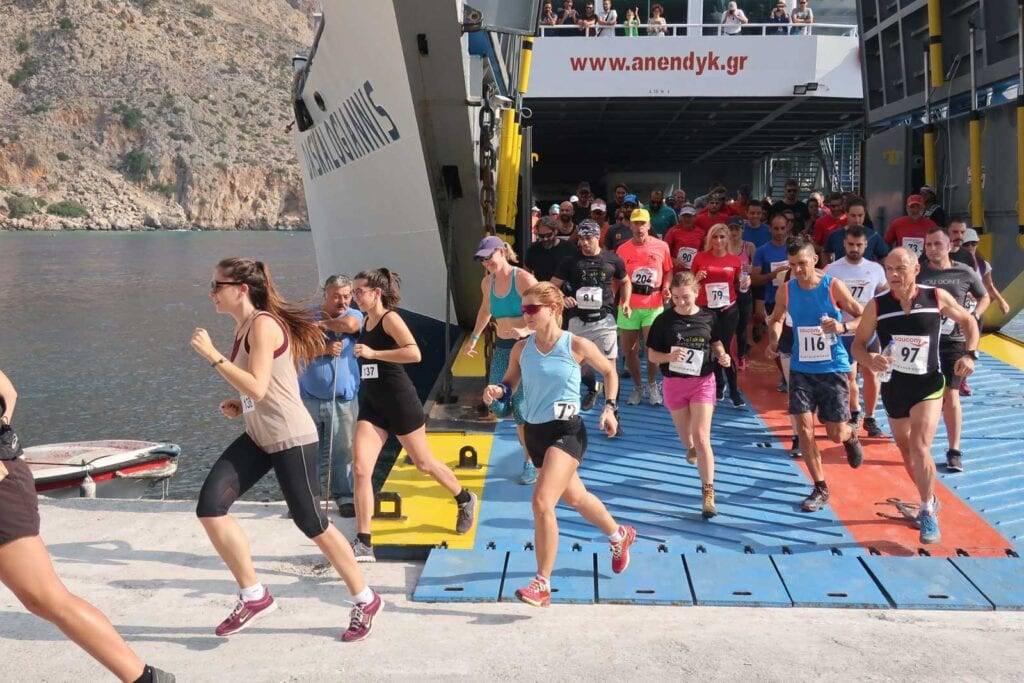
Sunrise on the sea and amazing start from the boat
Sfakia Sky is an exceptional competition, right from the start. Or rather, even before the start. We gather in the town of Chora Sfakion, which is not where we start running. The starting point – Loutro – is a village that has no connection with the world by any asphalt road (or any road at all). You can only get there by a narrow path along the shore of the Libyan Sea or by ferry. So we take the ferry. Before that, you can still pick up your starting number at the port (although it is better to do it the day before, the race office is also open on Friday evening in Anopoli).
On October 26, in the southern part of Crete, the sun rises at 7:39, so when we board the ferry (at 7:30 a.m.) it is still quite dark. And during this short journey, the day is born. It is only 30 minutes, but we slowly see how it is getting brighter and brighter. On the left side, the horizon line slowly emerges from total darkness somewhere between the sea and the sky, and if the air is clear, we have a chance to see Gavdos in the distance – the southernmost island in Europe. However, it is much more interesting on the right side of our sea vehicle. The ferry sails exceptionally close to the shore, at first you can see almost nothing, then slowly the outlines of the land emerge, or rather the outlines of the mountains, rising in this place directly from the sea. It is grey, but as soon as the sun appears, the colours are filled. However, these are not any shades of green or white, nothing grows on these coastal slopes, there are no villages there, not even individual houses. We are in Crete, the dominant colour is intense red turning into burgundy. The view is amazing, not so much lunar (this will be higher and later) as Martian. The combination of bare rock walls with a high iron content and the rising sun creates this incredible impression of red. Amazing also because it is partly fleeting. When we reach the shore in Loutro, our local star is already a little higher above the horizon, it is completely bright, and the colors of the surrounding rocks become more yellow-red than burgundy.
Sunrise in the day of Sfakia Sky Marathon competition, October 26, 2024

Loutro – a village on the edge of the Island
White also appears, because all the houses in Loutro are white. The village is located in a semicircle above a bay protected from the western winds. The terrain rises steeply upwards, so the whole thing resembles a large amphitheater, with the sea in the middle, a strip of beach around it and the main street right next to it. A “street” is not really the best description; around the beach there are simply taverns and cafes, flowing smoothly into each other, but there is enough space between the tables to walk or run. Run, because this is also the beginning of our route.
The ferry arrives at the dock in the western part of Loutro. We go ashore, do the necessary warm-up or talk to whoever we can and… back to the ferry! The start of the Sfakia Sky Marathon (and the Sfakia Vertical the following day) takes place exactly from the ferry, so from sea level (well, maybe 1 meter above sea level). As you can easily guess, the first 300 are on flat ground. We run along a promenade that is somewhat deserted at the very end of the season, among the cafes that are slowly closing, with a view of the increasingly blue Libyan Sea and the small island of Fanari protecting the port of Loutro from the west, and we think that this may be the only perfectly flat section of our race. Right after the left turn, everything changes. The first uphill section on the route begins…

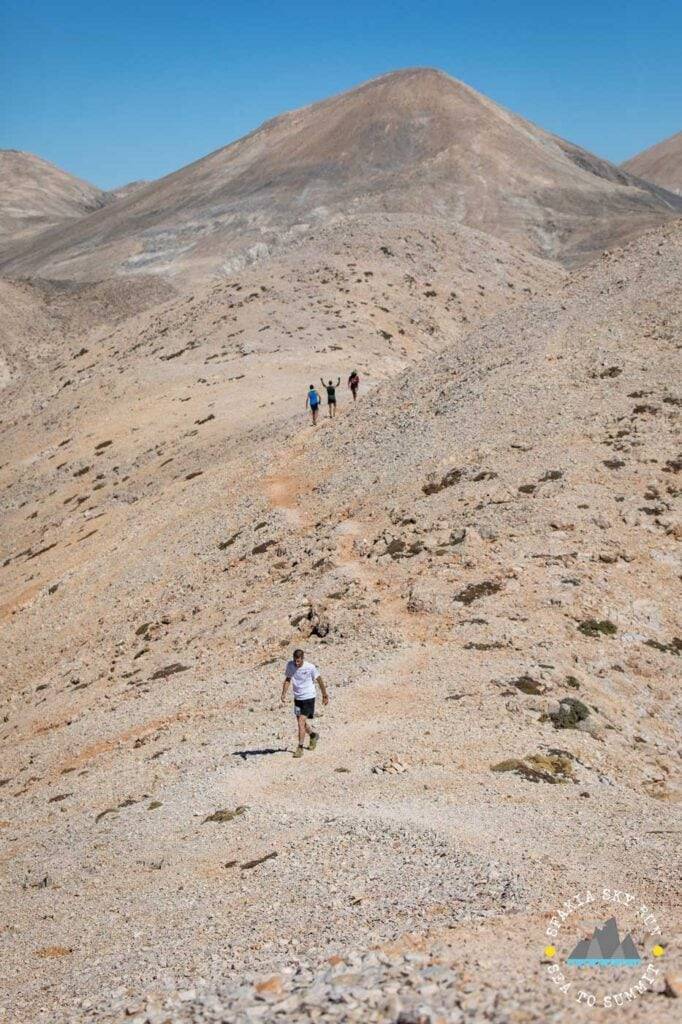
The way up: Anopoli, Aradena Gorge and Agions Ioanis on the horizon
After only 300 m of running we leave Loutro, or to be more precise, we leave the seaside boulevard. The route turns sharply to the left and begins to climb narrow streets, which are actually a sequence of stairs, only occasionally interspersed with flat sections. However, all this only lasts a moment, Loutro is a microscopic village, we pass the last house and a gate protecting the inhabitants from the invasion of sheep and goats. In front of us stretches a steep rocky slope, devoid of trees, yellow-brown in color, separating the coast of the island from the interior. From a distance, there is no path visible there, it is hard to believe that we will somehow manage to get to the other side. However, the path does exist, it winds through many bends, and by Cretan standards – it is even quite wide and comfortable. In many sections it is a well-preserved ancient kalderimi, what means a stone road. Crete once had hundreds of kilometers of such roads, and there were even more of them throughout Greece.
We run up a clear pass and we have… an asphalt road! The change is incredible. A large, almost flat valley stretches out in front of us with the village of Anopoli in the middle – our first refreshment station. (5 km from the start). The valley is surprisingly green, full of trees, mainly olives and fruit. Now it is a small village but once it was a large city, one of the most important in Crete with a history dating back thousands of years.
We only run through Anopoli for a moment, but it is worth realizing that two kilometers to the west stretches one of the most beautiful gorges in Crete – Aradena, with a bridge hanging over the abyss and the possibility of bungee jumping and a village of the same name abandoned due to vendetta. And 5 km further there is the village of AgiosIoanis – one of the most remote villages from civilization and a great starting point for trips to the White Mountains.
The road on this section is almost flat, so we move quite quickly. We run through a pine forest, another food station called Porolango and the real mountains begin. At the beginning we have a narrow, V-shaped valley that cuts into the steep slopes. There are still a lot of trees there, so sometimes you can find some shade. Generally, however, the path becomes hellishly difficult technically. Endless serpentines and stones, huge amounts of stones, both moving, escaping from under your feet with each subsequent step, and more dangerous ones, rooted in the ground like columns of ancient temples, so every snag threatens to fall.
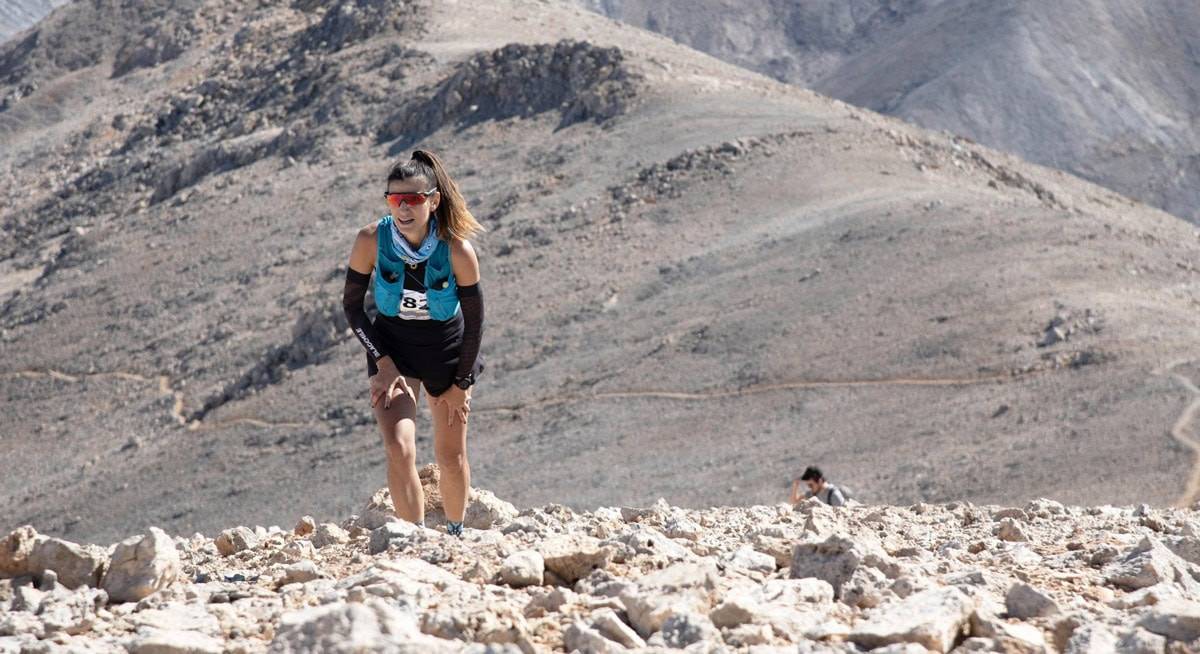
From the bottom of the valley you can’t see much and maybe it’s better because you can focus on gaining height (over a distance of 5 km we cover almost 1000 m vertically). It is also possible that this steep climb is mainly to mentally prepare ourselves for what awaits us in a moment, which certainly cannot be predicted or expected when someone is here for the first time. The terrain slowly flattens out, there are fewer and fewer trees and bushes, and finally you can’t even see any plants. Before us stretches a huge area of dry, gray, stony landscape straight from the Moon called Madara. A completely unique place, unlike anything in Greece or Europe. Without a doubt the biggest attraction of the Sfakia Sky Marathon, the main reason we run here.
What is Madara?
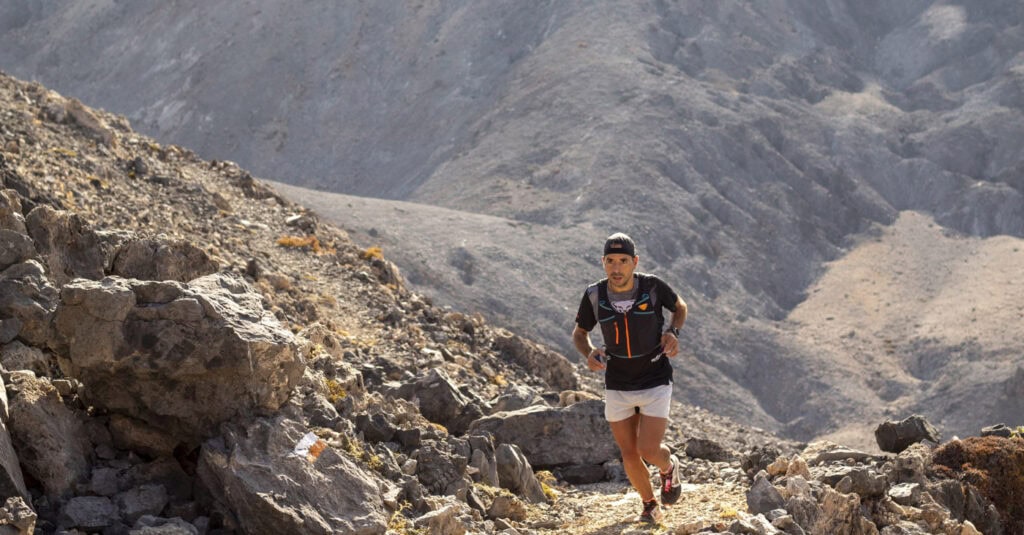
Madara is the highest, most inaccessible and driest area of the White Mountains (Lefka Ori). On the competition route, it is a section from about 15 to 35, i.e. about 20 km long! Each runner will certainly notice it, after the Agkathopi feeding station the landscape changes. There are no more trees, and soon you can see no vegetation at all. The gray colors of the bare rocks dominate, sometimes in shades slightly darker, up to almost deep black. This is a completely unique place, unlike any other mountains in Greece and probably no other mountains in Europe. A lunar landscape. It is difficult to say that these are classically rocky mountains like the Alps, Pyrenees or Tatras in Poland. There are practically no vertical walls or sharp ridges here. There is also no “logical” arrangement of the peaks along any clear lines or valleys. Generally, there are no deep valleys, all the peaks rise from a height of about 2,000 m and reach almost 2,500 m above sea level. And there are really many peaks above 2000 meters, different sources give numbers from over 30, through 55 to 58 (depending on how we define the peak and how precise the measurements are). No wonder that many observers talk about a sea of peaks stretching to the horizon.
A view from the Pachnes Summit to the East

Our route changes character a bit. It is no longer steep, many short sections even lead downwards, although in general we are still gaining altitude, or more precisely, we are conquering the highest peak of Lefka Ori – Pachnes (2453). For the more impatient competitors this may be a difficult time, especially if they keep asking themselves which one is Pachnes? The highest peak is completely invisible for the vast majority of the first part of the Sfakia Sky route, and when finally 1 km before the summit Pachnes becomes visible, it looks completely inconspicuous, barely sticking out beyond the surrounding “sea of peaks”. It is good that volunteers from the checkpoint are waiting there, informing the least oriented competitors that this is it (21 km of the route). It is also worth adding, that Pachnes is the first peak on our route, all that was before were various traverses, plateaus and passes.
Let no one delude themselves that since it was mainly uphill so far, now it will be downhill. There is no shortage of climbs in the second part of the route, we also have a second peak to conquer – Mavri Gourgutha (2435), and the path becomes (even) more technically difficult.
At the point furthest from the finish line – the old shepherd’s settlement Katsiveli – we have a surprise and an unusual reward. A 4-kilogram traditional hard cheese graviera awaits the first competitor who wants to challenge it, i.e. run with it to the finish line. The cheese has a unique taste, it is produced locally in the mountains, from the milk of goats and sheep that eat only high-mountain herbs (so something does grow in Madara after all). However, we warn you that only competitor running around positions 4 to 7 have a chance to take the cheese, and statistics indicate that he will lose several positions with cheese on his back.
Understanding Madara
Madara is such an extraordinary area that you not only want to be there, but also try to understand this phenomenon. How is it possible that Madara exists?
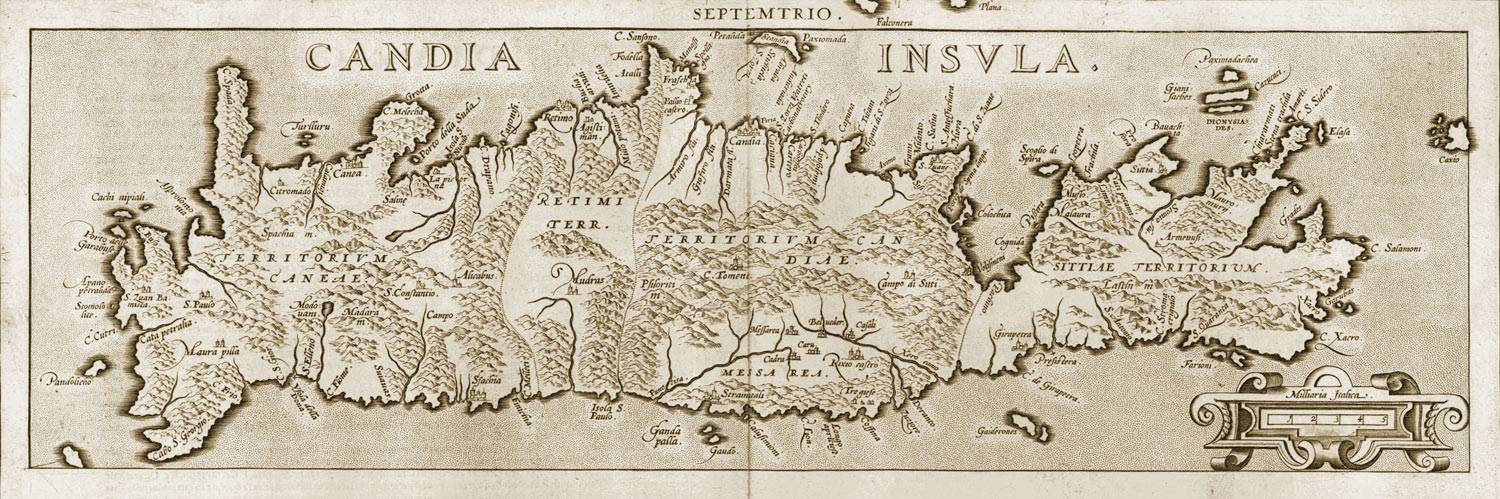
As is often the case with particularly exceptional phenomena, the answer is neither simple nor obvious, and the understanding is at least incomplete. The uncertainty concerns the name itself. We mentioned that Madara is the highest area of Lefka Ori, located above 2000 m. However, some sources suggest that Madara is simply another name for the White Mountains (Lefka Ori). The word “Madara” (Greek Μαδάρα) itself is supposed to come from the Cretan dialect and comes from the word μαδαρός meaning “without coverage, bald, bare of any vegetation for high mountain areas”. If this is indeed the case, it is a very old version of the Cretan dialect, since the name Madara – as the name of the mountains – appears already on the Venetian map of Crete by Abraham Ortelius from 1598.

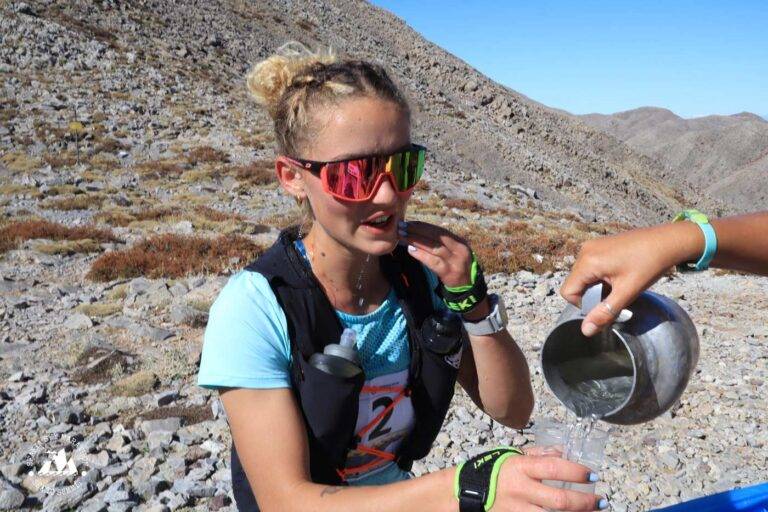
The expression “mountain desert” also has a somewhat perverse character. What kind of desert is this, since according to statistics the annual rainfall here is over 2000 mm? This is a huge amount, exceeding the amount of rainfall in places considered exceptionally humid. How is it possible then that it is so dry here? Most of this precipitation is snow, which lies in the mountains for half a year, but at these latitudes it does not actually melt, but evaporates directly.
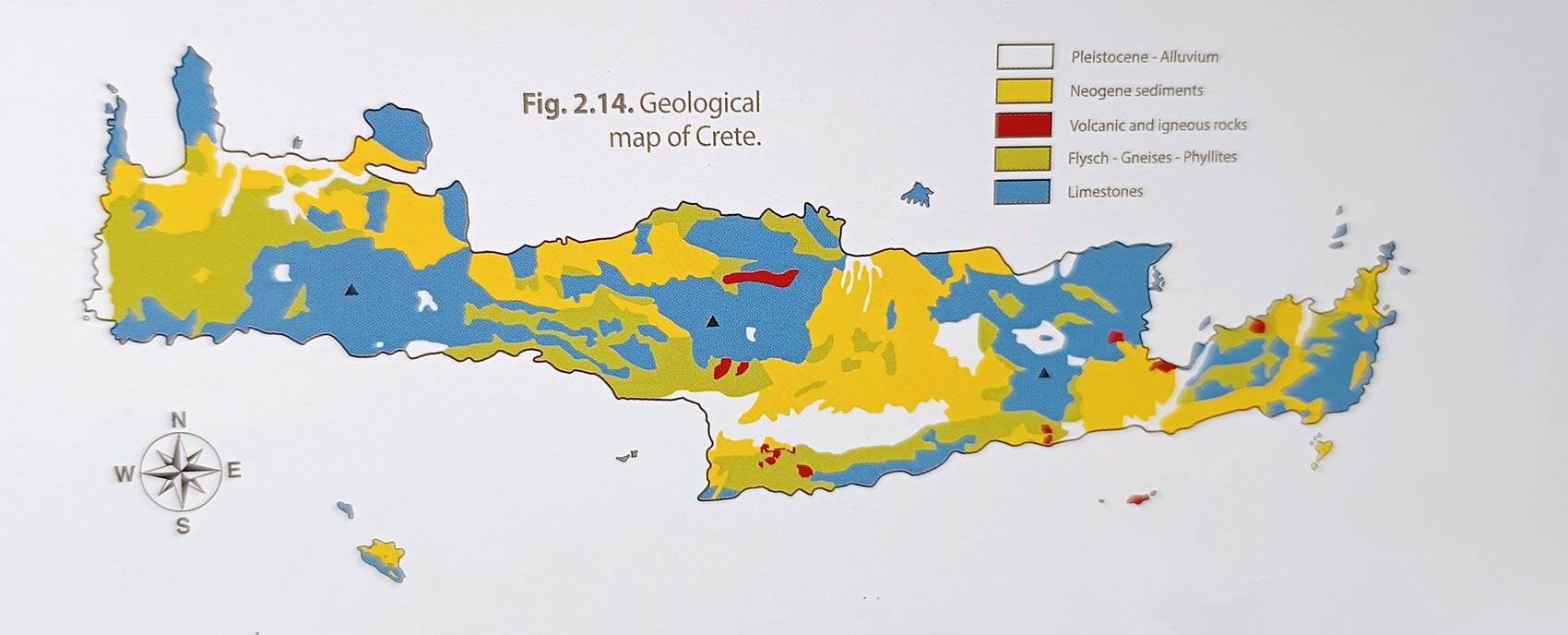
The second important element is the geological structure of these mountains – they are mostly various types of limestone, which easily let water through. This is why the landscape of Madara is full of larger or smaller, drainless depressions in the terrain, which in other conditions would create mountain lakes, but here they are completely dry. That is why Madara is full of caves (one of them with very steep walls a few meters from our route – caution is advised around 19 km), headed by the Gourgouthakas and Lion Cave with a depth of more than 1000 m (both not fully explored yet) – the deepest caves in Greece.
The impression of desert is also created by the temperature and intensity of solar radiation. During the summer months, even high in the mountains it can be really hot, there is practically no rain then, and the limestone rocks heat up much more than any other type of ground. It is also worth remembering that Crete is the southernmost part of Europe, in June the sun is 78 degrees above the horizon (optically it is almost vertical), from the top of Pachnes it is closer to Africa than to Athens!
So we have a recipe for a lunar landscape of a mountain desert. It is hardly surprising that in such a unique place half of the plant species that live there (yes, they are there) are endemics, i.e. species that occur exclusively in the White Mountains.
After 35 km of our run we leave Madara and run back into the more classic regions of Crete. Now it is really only downhill to the finish line.
Some moment after sunrise, Madara, Lefka Ori, Crete

Downhill run
A little earlier, at the 30th kilometer of the route, we reach a point called Rousies, where we run onto a section of the route we already know from the ascent and follow the same path to the finish line. However, the way down and the way up are never the same, no matter what geography and rational knowledge may think of it. We have a 14 km descent ahead of us without any ascents – only down. If we have some strength left, this descent is amazing: at the beginning a bit of a gravel road to a winding path, then a slightly steeper descent through a narrow valley in the Cretan forest, terribly stony and technically difficult, with an endless number of bends, at the end again gravel and even asphalt (1.2 km). If there are so many stones, flying over them is the only option.
We run into Anopoli again, where in the main square of the village we have a gate with the finish line of the competition. There are also two taverns and eternal glory that we have finished the most amazing competition in our lives. Until next time next year.
Warning: Sfakia Sky Marathon is addictive.
Appendix: The Story of One Photo
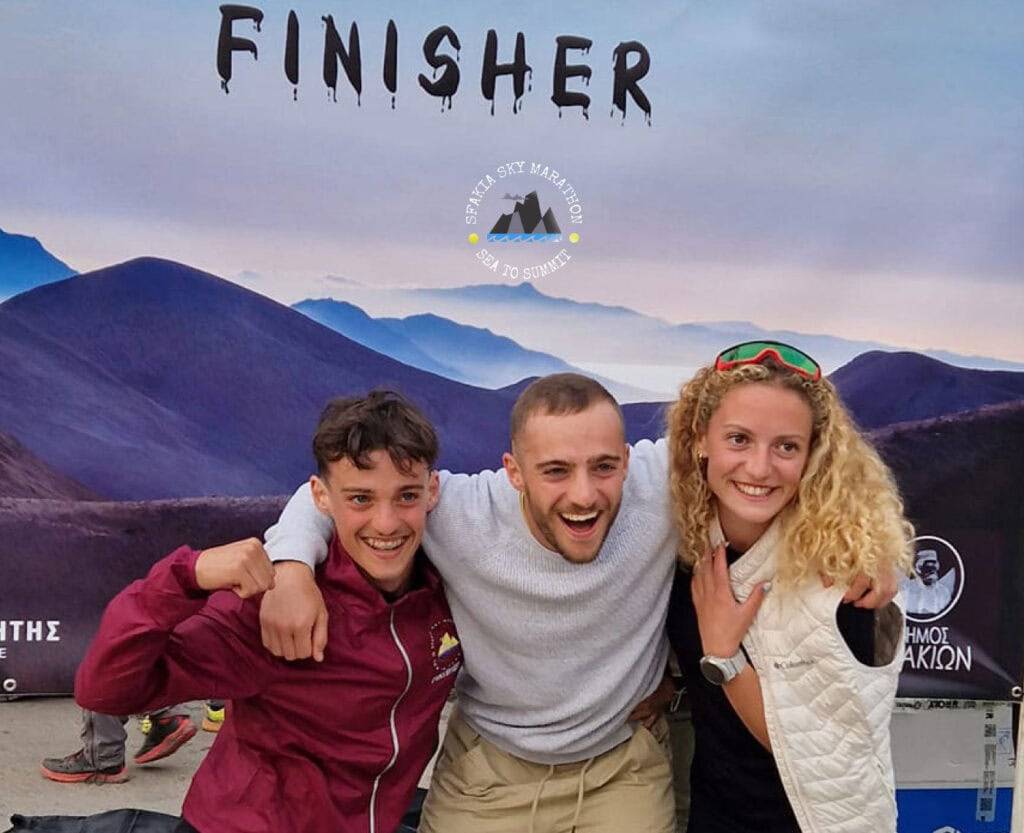
The photo below was taken on October 26, 2024, around 6:00 PM in the village of Anopoli in southern Crete, during the Sfakia Sky Marathon event. For those who were at this competition, the place and the people shown may be familiar, but the photo itself seems quite ordinary. Without a longer comment, it tells us little. So, who are these young people, and what are they so happy about?
The standard “Finisher” banner often used during running events indicates that they likely participated in the competition a few hours earlier, and judging by the smiles on their faces, they did quite well. But simply saying they are the winners of the Sfakia Sky competition is like saying nothing!
The boy on the left is Marcos Peat. He has just won the Sfakia Sky Marathon with a time of 5 hours, 28 minutes, and 7 seconds. Marcos is 18 years old, but this isn’t his first time in our competition; he also participated in the two previous editions. In 2022, it took him 8 hours and 13 minutes to reach the finish line. The difference between these results is staggering. However, the most extraordinary thing is the evolution that Marcos has undergone. After his first mountain marathon, Marcos decided to start training seriously, running more frequently and faster. We could observe his progress up close because, although he has French-English family roots, he lived in Crete for several years. Malaxa, Meskla, Zourva, Pachnes from Anopoli, and the E-4 path along the southern coast of Crete were his training fields. Marcos also ran faster and faster in our local competitions: Samaria Run, Sitia Geo Trail, and Minoiko Monopati, even when he occasionally overdid it and twisted his ankle on a downhill. I remember him saying in youthful ecstasy, “I can’t imagine my life without running anymore.” And he began to take on the best more boldly. The result from a few days ago shows that he is already the fastest on the Island. And this is only the beginning of his journey…
The most interesting part, however, is that the story we are telling here, is a family story. The man in the middle of our photo is Leonidas—Marcos’ older brother. He finished our competition in third place, despite twisting his ankle 10 km before the finish line (family tradition?).
And the girl, first on the right, is Lilou – Leonidas’ girlfriend. She crossed the finish line after 6 hours and 4 minutes, right behind her boyfriend. Lilou finished the competition in fourth place in the Open classification and as the first woman. She is not new to our competition either; compared to the previous year, she improved her result by 51 minutes, which is an incredible achievement.
With such results, is it any surprise there are wide smiles on the faces of our winning trio?
Finally, let’s return to our winner. Kilian Jornet won his first UTMB at the age of 20. Marcos still has two years to reach that milestone, although it’s uncertain if he will develop in the same way. However, he is undoubtedly a running talent of a similar scale. The day after the competition, he told me he is suspending longer-distance races for now and focusing on races up to 20 km, following the well-known principle that young people have a better chance in shorter distances. If talent goes hand in hand with wise choices, one can be confident about Marcos’ future.
useful information
Sfakia Sky Marathon is a competition held on the last weekend of October, on Crete in Greece. In year 2025 it will be October 25-26th.
The starting point is located on the southern coast of the island, about 70 km from the city of Chania. The most convenient way to get to Chania is by plane (many flights from various European cities) or by ferry from Pireus/Athens. The flight time depends on the distance, the ferry sails to Crete all night (it starts at 9:00 p.m. and in Chania it is at 6:00 a.m.).
There are no railway lines in Crete, public transport is mainly buses. However, the number of courses from Chania to the south of the island is very limited, so the most convenient way to travel and get to the start is to rent a car, especially since rental prices in October are very favorable.
There are countless hotels, guesthouses and private accommodation in Crete. Competitors can rent accommodation either in Chania (if you have a car, you can easily make it to the start) or in the area of Chora Sfakion. The start of the Sfakia Sky competition is a bit more complicated logistically. The starting point – Loutro – is a town to which no asphalt road leads. Competitors therefore gather in Chora Sfakion and from there a ferry takes us to Loutro. Therefore, the most convenient option is to rent accommodation in Chora Sfakion or in the surrounding villages. The finish line of the competition is in the village of Anopoli (10 km from Chora Sfakion), and the organizer provides a bus from Anopoli to Chora Sfakion after the competition.
It is worth coming to Crete for a week, not just for two days of competition. The Samaria Gorge will be very attractive for runners – it offers the best-maintained paths on the island and beautiful views. The path leading along the southwestern coast of Crete is also amazing (and completely different from the competition route). It is about 80 km long, from Chora Sfakion to Elafonisi Beach. You can run any part of it, such as the section from Loutro west to Agia Roumeli (the place where the Samaria Gorge ends).
For travelers with a more cultural mindset, the city of Chania is worth recommending – with a very distinct Venetian atmosphere, and above all the Archaeological Museum in Heraklion, where all the treasures of Minoan culture are located.
find out more
Official Sfakia Sky Marathon website
Some ideas about the other very interesting path for running in Crete you can find in my essay The Path of Your Dreams
You can also check the other Running Competition in Greece in my short guide
All photos: official Sfakia Sky Marathon website. A photo in Appendix”: Myriam Peat.
Much shorter version of this text was published in parts on the official Sfakia Sky Marathon website.
YOU MAY ALSO LIKE

Phaistos Disk. The messenger of the forgotten world
READ MORE

Glistrokoumaria - Greek Strawberry Tree
READ MORE

The Path of Your Dreams. From Chora Sfakion to Elafonisi Beach
READ MORE